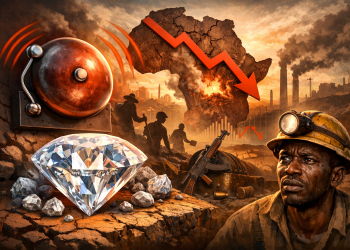
As the price of diamonds plummet on the world market, over 2 million jobs in Africa are at stake, countries like Botswana and Sierra Leone are losing significant shares of GDP.
For decades, Africa has produced over 50% of the world’s diamonds and remains the major source of high-quality gem diamonds. Despite this mineral wealth, Africa’s communities where diamonds are mined remain amongst the poorest in the world. The reason? Governance.
In the early 2000s rebel groups in multiple African countries were using diamonds to fund horrific violence. Africans and international Civil Society raised the alarm and in 2003 the Kimberley Process was born. This global diamond governance organization managed to put in processes for certification. Its objective was to ensure “conflict diamonds” were not sold on the world market.
Africa evolved. Between 2005 and 2015 there were fewer and fewer rebel groups. Diamonds, however, remained at the center of conflict. The Kimberley Process Civil Society Coalition (KP-CSC), today made up of 17 organizations from 12 African countries and Belgium, demonstrated throughout the years that while most diamonds were no longer mined by rebel groups, they were still deeply steeped in violence and conflict.
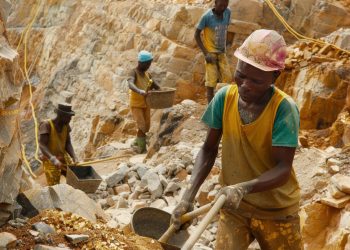
It is unquestionable that communities gain from the precarious jobs and often dismal revenue that diamond mining generates. However, they also suffer the human rights violations, environmental degradation, child labor and gender-based violence that are all an integral part of mining in many African countries.
The KP-CSC has called for governments and private sector companies to mine “rights-based, development diamonds” which truly benefit communities. Diamonds can be mined in processes that are environmentally safe, produce decent jobs, and generate significant revenue for development. Artisanal mining, which employs the largest number of people in the sector can be supported for true enterprise development so those who practice it can make a decent living while respecting both human and environmental rights. The KP CSC has even outlined a Model Diamond Governance Framework to help governments at national and local levels improve the governance of the sector to the benefit of citizens.
Unfortunately, over the years, Botswana is the only African country to have developed a strong strategy for diamond production which greatly reduces rights violations and ensures value addition to the stones within its national borders.
No African diamond producing country has truly championed the production of “rights-based, development diamonds.” The world’s favorite gem continues to be tainted with stories of violence and rights violations.
So, the world evolved. Lab-grown or synthetic diamonds entered the gem market in the early 2000s. They were marginal and even laughed at by the mainstream market for two decades. Today, synthetics represent 45% of the engagement rings sold in the United States and 21.3% of global market share.
African producers are reducing production, stockpiling and watching their revenues fall. Our continent had decades to put into place diamond production that respects human rights, ensures traceability, respects the environment and ensures development for African communities.
We did not. A colossal governance failure.
Real diamonds are from Africa. There is still time for African diamond producers to take charge and implement the reforms necessary to make these precious stones they produce for the world a delight for every stakeholder in the value chain. But that time is running out! African diamond producers must act quickly, proactively and in unity to save the diamond market they depend on along with their GDPs.
Meanwhile, at this moment, where Africa holds about 30% of the world’s mineral reserves, at this time when critical minerals, strategic minerals and rare earths are all in exponentially growing demand, diamonds must serve as a bellwether for the entire African mining sector.
The time to implement our mining strategies is now.
The time to ensure mining that respects human rights and the environment is now.
The time to ensure value addition within our national and continental borders is now.
The time to ensure that mining communities derive the highest possible development benefits is now.
Before the world evolves again, the time for African mining that benefits Africa is now!