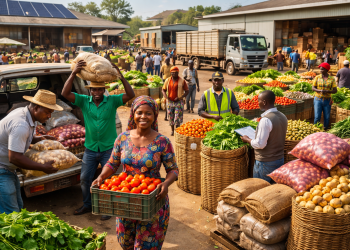
Africa does not lack agricultural ambition. It does not lack strategies, declarations, investment plans, roadmaps, continental frameworks or international commitments.
From Maputo in 2003, through Malabo in 2014, to Kampala for the 2026-2035 period, African States have repeatedly affirmed their ambition to make agriculture a driver of growth, food security, employment, resilience and sovereignty. In Maputo, African Heads of State and Government committed to allocating at least 10% of national public expenditure to agriculture and achieving an average annual agricultural growth rate of 6%.1
Twenty years later, the urgency remains acute. In 2024, around 673 million people in the world still faced hunger. In Africa, 307 million people were undernourished, representing 20.2% of the continent’s population. If current trends continue, nearly 60% of the 512 million people who could suffer from chronic hunger in 2030 will live in Africa.2
These figures convey a simple message: the challenge is not merely to produce strategic frameworks. The challenge is to deliver results.
Those results must be visible where transformation matters most:
-
in villages;
-
in production areas;
-
in local markets;
-
in rural areas;
-
among smallholder farmers and small-scale producers;
-
among rural women;
-
among young people;
-
among the most vulnerable households.
Food systems transformation cannot be assessed only through national reports, continental scorecards or major international meetings. Transformation must be judged from the ground up. It must be visible in producers’ incomes, women’s access to land and resources, economic opportunities for young people, food prices in markets, the nutritional quality of household diets and the ability of rural communities to withstand shocks.
This is precisely where the missing link lies: governance.
Not governance as a technical term added to documents. Rather, governance as the real capacity to organise collective action, clarify responsibilities, finance priorities, monitor results, ensure accountability and ensure that public policies actually transform people’s lives.
Maputo and Malabo: strong ambitions, insufficient results
We must return to the two previous phases of CAADP.
Maputo set a foundational ambition: to make agriculture a political and budgetary priority. The objective was clear: more public investment, stronger agricultural growth, greater food security and faster poverty reduction.
Malabo sought to go further. The 2014 Declaration placed stronger emphasis on agricultural transformation, inclusive growth, nutrition, resilience, mutual accountability and results. Yet the results did not meet expectations.
The fourth CAADP Biennial Review cycle, released in 2024, showed that 49 Member States submitted reports, 19 were making progress, 30 were not on track and 6 did not report. More importantly, no Member State was overall on track to meet the Malabo goals by 2025.3
This does not mean that nothing was done. It means rather that progress was too slow, too uneven, too fragile and too far removed from the real needs of rural populations.
The reasons are well known:
- political commitments did not always translate into actual budgets;
- agricultural expenditure often remained far below the 10% target;
- national priorities often remained too general;
- implementation arrangements were fragmented;
- monitoring and accountability mechanisms lacked strength;
- data was insufficient or poorly used;
- non-state actors were consulted, but not always integrated into decision-making and implementation;
- local authorities, rural territories and farmers’ organisations were often too weakly involved;
- women, young people and vulnerable groups were mentioned, but not sufficiently supported through concrete mechanisms.
The CAADP Strategy and Action Plan 2026-2035 itself recognises that, during the Malabo era, public financing for agriculture often remained below the 10% target, and calls for public expenditure reviews to improve the effectiveness and impact of budget allocations.4
The problem with Maputo and Malabo was therefore not only a problem of ambition.
It was above all a problem of how ambition was governed.
Kampala: an opportunity, provided governance changes radically
Kampala is being implemented in a more difficult, more complex and more demanding context.
Africa faces an accumulation of crises: persistent food insecurity, climate change, conflicts, pressure on public finances, dependence on food imports, fragile local markets, limited access to finance for small-scale producers and the growing vulnerability of rural populations.
The African Union recalls that Africa is home to nine of the ten countries most vulnerable to climate change and that some Member States already spend up to 9% of their national budgets responding to climate extremes.5
In this context, Kampala cannot be yet another declaration. It must truly become a pathway for transformation.
The announced ambitions are significant: mobilising USD 100 billion, increasing agrifood output by 45%, tripling intra-African trade in agricultural products and reducing post-harvest losses by 50%.6
These objectives are useful. But they will matter only if they are translated concretely:
- into national budgets;
- into investment plans;
- into local agricultural services;
- into territorial markets;
- into storage systems;
- into rural infrastructure;
- into access to finance;
- into land policies;
- into social protection mechanisms;
- into producers’ incomes;
- into food security for poor households.
Kampala will succeed only if its commitments become visible in local territories. The real measure of success will not be the number of aligned plans, but the number of rural communities whose living conditions improve.
The problem is not the absence of ideas
The priorities are widely known.
We know what needs to be done:
- strengthen transformative agricultural policies;
- support small-scale producers;
- develop agroecology;
- structure local value chains;
- finance cooperatives and rural SMEs;
- improve women’s and young people’s access to resources;
- reduce post-harvest losses;
- develop local markets;
- strengthen storage, preservation and processing systems;
- improve agricultural data;
- better connect agriculture, nutrition, climate, trade and rural development;
- align global, continental, national and local agendas.
But identifying priorities is not enough.
The real challenge is to answer the simple question: how can these priorities actually change living conditions at local and rural levels?
A national strategy may be well written. But if it does not change producers’ access to agricultural advisory services, finance, appropriate inputs, markets, infrastructure and protection against risks, it will remain distant from real transformation.
An inclusion policy may be ambitious. But if rural women cannot access land, credit, equipment, training, data, markets and decision-making spaces, inclusion will remain theoretical.
A youth policy may sound attractive. But if rural young people find neither finance, nor support, nor economic opportunities in local value chains, it will not change their future.
Transformation must therefore be judged by one fundamental question: what concrete changes occur for the most vulnerable populations?
Governance must start from the ground
Food systems governance must answer simple questions.
- Who decides?
- Who coordinates?
- Who finances?
- Who implements?
- Who represents producers?
- Who amplifies the voices of rural women?
- Who defends young people in agricultural areas?
- Who protects vulnerable households?
- Who produces the data?
- Who monitors results?
- Who gives accounts to citizens?
- Who corrects course when policies do not produce the expected effects?
When these questions remain unclear, strategies remain fragile.
Responsibilities become diluted. Funding is fragmented. Actors work in silos. Commitments become difficult to track. Rural communities remain far removed from decisions made in their name.
The new CAADP Strategy and Action Plan 2026-2035 marks an important shift: it moves from an approach mainly centred on agricultural growth to a broader agrifood systems approach, integrating production, processing, distribution, consumption, nutrition, sustainability, value chains and governance. It also emphasises transparency, accountability and inclusive stakeholder participation.7
But this shift will produce results only if it is translated to the local level.
Governance must organise an action chain that runs from the continental framework to the village, from the ministry to the producer, from the strategic plan to the local market, and from political commitment to the household food basket.
Inclusion must become a capacity to influence
We must be forthright about inclusion.
Inclusion does not simply mean inviting women, young people, farmers’ organisations, CSOs or the private sector into a room. Nor does it simply mean mentioning them in a report.
Real inclusion is measured by the ability of these groups to influence decisions, concretely access resources and accountability mechanisms that lead to continuous improvement in the implementation of strategies.
This requires moving:
- from symbolic presence to real influence;
- from occasional consultation to structured and continuous participation;
- from beneficiary status to the role of co-architect;
- from invitations to workshops to access to budgets, data and decisions;
- from formal representation to shared responsibility.
This requirement is even more important at local and rural levels. This is where inequalities are most visible. This is where women often produce, process and sell without being recognised at the level of their contribution. This is where young people seek opportunities without always having access to land and finance. This is where smallholder farmers carry climate, economic and health risks with limited protection.
The figures confirm the strategic importance of this issue. FAO estimates that agrifood systems employ 36% of working women globally and 38% of working men. In sub-Saharan Africa, these systems are an even more decisive source of income: 66% of women’s employment and 60% of men’s employment. Yet women working in agriculture earn on average 82 cents for every dollar earned by men. According to FAO, closing gender gaps in agrifood systems could increase global GDP by about USD 1 trillion and reduce food insecurity by 45 million people.8
This means something simple: including rural women is not a favour. It is a condition for economic, social and food systems performance.
Young people must also be placed at the heart of transformation. Globally, 44% of working youth depend on agrifood systems for employment, compared with 38% of adults. But youth food insecurity rose from 16.7% in 2014-2016 to 24.4% in 2021-2023, with a particularly worrying situation in Africa.9
This means that food systems must be understood as pathways for the future for young people, not as sectors of last resort.
Financing is the real test
No serious transformation of food systems can take place without appropriate financing.
It is not enough to announce budgets. We must examine how money flows, who has access to it, which risks are covered and which actors are actually supported.
The right questions are simple.
- Do financing mechanisms reach producers?
- Do rural women have access to them?
- Can young people in agricultural areas mobilise capital?
- Do cooperatives have working capital?
- Can rural agrifood SMEs invest?
- Are agricultural risks shared?
- Is the State creating the conditions and policies needed to double or triple private investment?
- Do public funds support local transformation?
- Do financial mechanisms protect the most vulnerable?
Financing that remains concentrated at central level rarely transforms rural realities. Financing that does not reach producers does not transform agriculture. Financing that excludes women, young people and smallholder farmers reproduces vulnerabilities.
CAADP 2026-2035 emphasises the need to mobilise domestic and external resources through national agrifood investment plans. It also highlights the importance of partnerships with the private sector, green finance and strengthening the capacities of implementing institutions.10
The central issue remains the same: money must reach the ground.
An unfunded priority is not a priority. It is an intention.
Data must support governance from the ground
Data is essential. But it must be used for decision-making, not only for producing reports.
Too often, agricultural data is produced far from the field, circulates poorly between institutions and does not flow back sufficiently to local actors. Yet it is in local territories that verification of whether policies actually work occurs.
Data must make it possible to know:
- which producers effectively benefit from policies;
- which women truly access resources;
- which young people find economic opportunities;
- which rural areas remain underfunded;
- which households remain food vulnerable;
- which practices improve incomes without degrading soils;
- which local markets work;
- which infrastructure is missing;
- which commitments are not being met.
The CAADP Biennial Review system has played an important role in monitoring and mutual accountability. With Kampala, this mechanism is entering a new phase: the indicators inherited from Malabo have already undergone a process of review and simplification, notably during the continental consultation in Windhoek, to better align them with Kampala’s six strategic objectives and new targets. The issue now is for these indicators to be used less for producing reports than for steering public policies, improving data quality and measuring real change in local territories.11
Data must therefore not be a mere reporting tool for third parties. It must become a tool for local steering, public transparency and collective accountability.
Post-harvest losses remind us of the importance of the local level
Post-harvest losses illustrate very clearly the gap between continental ambitions and local realities.
The problem is not solved in speeches. It is solved in villages, production basins, rural roads, local markets, warehouses, cold rooms, processing equipment and transport systems.
The World Bank recalls that FAO estimates indicated that up to 37% of food produced in sub-Saharan Africa could be lost between production and consumption, with losses estimated at 20.5% for cereals and 8% to 12% for losses related to post-harvest handling and storage.12
This is why Kampala’s objective of cutting post-harvest losses in half is important. This objective will be achieved only if investment goes into concrete solutions:
- rural roads;
- storage;
- drying;
- preservation;
- local processing;
- access to energy;
- cold rooms;
- packaging;
- market information;
- producer organisation;
- financing for cooperatives and rural SMEs.
Reducing post-harvest losses is not merely a matter of logistics. It means increasing producers’ incomes, stabilising prices, improving food availability and reducing household vulnerability.
Global agendas must reach the field
One of Kampala’s major challenges will be alignment between levels.
Global frameworks speak of food systems transformation. Continental frameworks set directions. National strategies translate these ambitions, but local territories are waiting for services, roads, markets, finance, training, equipment, data and opportunities.
The risk is well known: each level produces its own language, indicators, meetings and deadlines. In the end, agendas accumulate without always producing real change on the ground.
A clear chain must therefore be built between:
- global commitments;
- continental frameworks;
- national policies;
- subnational arrangements;
- rural communes;
- producers;
- local markets;
- vulnerable households.
The CAADP Strategy and Action Plan 2026-2035 states that its principles must be operationalised and made binding at national, regional and local levels to strengthen stakeholder engagement and accountability.13
A global or continental agenda that does not reach local territories remains a speech. A national strategy that does not change the conditions of production, processing, marketing and consumption remains a document.
What must change now
The transformation of African food systems requires a change in methodology.
This means:
- less institutional layering and more strategic clarity;
- fewer general declarations and more precise mechanisms;
- less decorative inclusion and more real power given to local actors;
- fewer isolated projects and more systemic coherence;
- less reporting and more accountability at the territorial level;
- less centralisation and more local implementation capacity.
In practical terms, each country should clarify:
- the food priorities it truly assumes;
- the strategic value chains for rural areas;
- the territories to be supported as a priority;
- coordination mechanisms between ministries and local authorities;
- the precise role of producers, women, young people, CSOs and the private sector;
- financial mechanisms adapted to rural realities;
- the data needed for local steering;
- result indicators for vulnerable populations;
- spaces for dialogue and accountability at local level;
- ways of connecting Kampala to the concrete realities of communities.
It is at this level that transformation becomes possible.
Conclusion
The transformation of African food systems does not suffer from a lack of ideas. It suffers above all from a deficit of functional governance.
Strategies exist. Ambitions exist. Frameworks exist. Good practices are increasingly well known. Actors are present. Needs are obvious.
What is too often missing is the capacity to organise all this into a coherent, inclusive, financed, measured and accountable system – a system that produces visible changes at local level, in rural territories and among the most vulnerable groups.
Transformation is not decreed. It cannot be reduced to a declaration. It cannot be measured by the number of documents produced or events organised.
It is governed.
Africa does not only need new food strategies. It needs systems capable of transforming strategies into results, where these results matter most: in local territories, rural communities and the lives of the most vulnerable populations.
Franck Essi
Senior Consultant
References
-
African Union (2025), CAADP Strategy and Action Plan: 2026-2035. URL: https://au.int/sites/default/files/documents/44705-doc-OSC68108_E_Original_CAADP_Stratedy_and_Action_Plan.pdf
-
FAO, IFAD, UNICEF, WFP and WHO (2025), The State of Food Security and Nutrition in the World 2025, FAO Newsroom, 28 July 2025. URL: https://www.fao.org/newsroom/detail/global-hunger-declines--but-rises-in-africa-and-western-asia--un-report/en
-
African Union (2024), 4th CAADP Biennial Review Report 2015-2023. URL: https://au.int/en/documents/20240229/4th-caadp-biennial-review-report-20125-2023
-
African Union (2025), CAADP Strategy and Action Plan: 2026-2035. URL: https://au.int/sites/default/files/documents/44705-doc-OSC68108_E_Original_CAADP_Stratedy_and_Action_Plan.pdf
-
African Union (2025), African Union launches the CAADP Strategy and Action Plan 2026-2035 and the CAADP Kampala Declaration, 6 May 2025. URL: https://au.int/en/pressreleases/20250506/au-launches-caadp-strategy-action-plan-2026-2035-caadp-kampala-declaration
-
African Union (2025), African Union launches the CAADP Strategy and Action Plan 2026-2035 and the CAADP Kampala Declaration, 6 May 2025. URL: https://au.int/en/pressreleases/20250506/au-launches-caadp-strategy-action-plan-2026-2035-caadp-kampala-declaration
-
African Union (2025), CAADP Strategy and Action Plan: 2026-2035. URL: https://au.int/sites/default/files/documents/44705-doc-OSC68108_E_Original_CAADP_Stratedy_and_Action_Plan.pdf
-
FAO (2023), The Status of Women in Agrifood Systems, FAO Newsroom. URL: https://www.fao.org/newsroom/detail/women-s-equality-in-agrifood-systems-could-boost-the-global-economy-by-1-trillion-reduce-food-insecurity-by-45-million-new-fao-report/en
-
FAO (2025), The Status of Youth in Agrifood Systems, FAO Newsroom. URL: https://www.fao.org/newsroom/detail/the-status-of-youth-in-agrifood-systems--new-fao-report-shines-light-on-pitfalls-and-prospects-for-1.3-billion-young-people/en
-
African Union (2025), CAADP Strategy and Action Plan: 2026-2035. URL: https://au.int/sites/default/files/documents/44705-doc-OSC68108_E_Original_CAADP_Stratedy_and_Action_Plan.pdf
-
African Union (2025), CAADP Strategy and Action Plan: 2026-2035; African Union (2026), African Union Holds Continental Consultation on CAADP Kampala Result Framework and Biennial Review (BR) Indicators, 27 March 2026. URLs: https://au.int/sites/default/files/documents/44705-doc-OSC68108_E_Original_CAADP_Stratedy_and_Action_Plan.pdf ; https://au.int/en/pressreleases/20260327/au-holds-continental-consultation-caadp-kampala-result-framework-and-br
-
World Bank (2018), Is Post-Harvest Loss Significant in Sub-Saharan Africa? URL: https://www.worldbank.org/en/programs/africa-myths-and-facts/publication/is-post-harvest-loss-significant-in-sub-saharan-africa
-
African Union (2025), CAADP Strategy and Action Plan: 2026-2035. URL: https://au.int/sites/default/files/documents/44705-doc-OSC68108_E_Original_CAADP_Stratedy_and_Action_Plan.pdf
Warning: Undefined array key "stax_visibility_keep_html" in /home/clients/c45f4a67a034f04f234e3388131b74f1/sites/strategiesconsultingfirm.com/wp-content/plugins/visibility-logic-elementor/core/Plugin.php on line 249