As the world experiences profound geopolitical transformations: reshaping alliances, redefining multilateralism, and reassessing global shared values, Africa stands at a carrefour of immense opportunity. To seize this moment, the continent must act decisively at national, regional, and continental levels, translating potential into tangible results for Africans.
The Opportunities Before Us
- Strategic Non-Alignment. Not since the 1800s, before colonialism, has non-alignment been more accessible for Africa. The decline of American hegemony and the existence of at least four new centers of power: China, Europe, Russia and other nuclear power states (India, Pakistan, Iran, North Korea); the rise of the BRICS; new international payment systems independent of the US dollar and the abrupt end of US development assistance all mean for Africa that we are “freer’ today to choose our partners than we have been for decades.
- The Last Stage of Independence. Recent African political transitions in the Sahel including both the AES States (Burkina Faso, Mali, Niger) and Senegal are centered on African interests and on disrupting the post-colonial stranglehold. Notably the military transitions are still a far cry from what is needed in Africa in terms of respect for the fundamental rights, rule of law and delivery of much needed services: security, water, electricity, jobs, etc. Most unfortunately seem to be on the path of renewing cycles of violence and repression. Nevertheless, there is no question that they have traversed into new territory in the African imaginary, of great appeal for Africans at home and abroad. The possibility of a sovreign African state without colonial constraints.
- Leadership on Rights. South Africa is firmly positioned in the axis of new moral leadership for the world. In the face of the previously inconceivable, continued mass violation of every human right of the Palestinian people by Israel and the adjudication by the World Court at the Hague that this constitutes genocide; aided, and even encouraged by western countries, the United States and Europe (as a block) have definitively lost the moral high ground on the global stage. A new axis is emerging of countries that have greater credibility as they make efforts to respect human rights at home and throughout the world. This axis includes smaller European countries (Spain, Ireland, Belgium), South American countries (Columbia, Bolivia) with South Africa in an unquestionable leadership position. This puts Africa at the forefront as the world redefines the universality of human rights, shared global values and multilateralism as a whole.
- Resource Powerhouse. Despite rhetoric against immigration throughout western countries, the world is in dire need of Africa’s workforce which by 2040 will be the largest on earth. Africa holds ¼ of the world’s arable land, 30% of its mineral resources and vast resources for climate action and resilience. During its first 65 years of independence the Continent was a net loser in global resource transactions. Experience, critical minerals and a more balanced geopolitical landscape present Africa with the opportunity to radically improve the benefits its citizens derive from their resources.
While these opportunities are unquestionable, they require Africa to carry out decisive, well thought out, strategic action in a timely manner, in order to seize them.
Five Key Actions
1. Craft and Execute a Bold Geopolitical Strategy. While Africa has in recent years gained more space and visibility on the international stage, it must move from reactive diplomacy to a proactive, unified strategy that takes full advantage of its positioning and its resources. African countries at national, regional and continental levels must do deep analysis of global shifts and changes to determine what the key priorities are for the Continent and how it wants to interact with the rest of the world. Priorities include, but are not limited to:
- Peace and Security in key regions: The Sahel, The Great Lakes, Sudan and South Sudan, The Horn of Africa, The Lake Chad Basin.
- Accelerating the African Continental Free Trade Area (AfCFTA) to produce significant and increasing results between now and the next 5 years
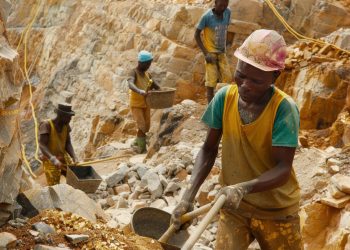
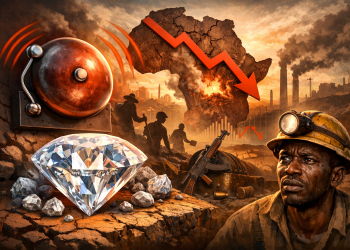
- Improving revenue and benefits by trading as an African block in key commodities where we hold a global production advantage: cocoa (70%), coltan (80%), diamonds (60%), copper (21%), etc. The world needs our resources. There is no net-zero without Africa. This is our bargaining power. Our resource-curse must become a resource-blessing, not only by earning more, but by managing the income so that Africa too can have sovereign wealth funds on par with our resource wealth.
- Developing and implementing an African climate strategy which puts the Continent’s interests first and negotiates fair partnerships for global sustainability. Africa’s low carbon footprint and its multiple carbon sinks position it to lead on climate action and become a net beneficiary in terms of development. African countries must lead in defining climate solutions, including compensation from the rest of the world.
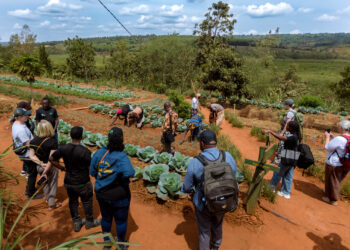
- Ensuring the transformation of the agri-food system to provide food security and nutrition for Africans. Making agriculture a priority for the continent and a major trading sector with the rest of the world, by embracing climate-smart agriculture that guarantees our global future.
- Taking leadership on human rights and the building of new platforms and institutions for multilateralism.
To be effective, such a strategy must take into account the diversity of African national interests and overcome existing rivalries. A coalition of 5–10 willing states could lead diplomatically, backed by think tanks, the outstanding grassroots movements of youth and women currently on the continent and diaspora networks. The impulse may have to start outside traditional institutions and weave its way into them.
2. Radically Improve the Functionality of African States. Dysfunctional states cannot partner and negotiate on the global stage. In a volatile world, they will continually lose. Far too many African states are dysfunctional for multiple reasons. Colonization, war, corruption and non-merit-based systems have all contributed to build African states that are not present throughout their national territory, do not deliver goods and services to citizens, do not ensure safety and sustainability, and give even less hope to citizens. Functionality entails decolonizing the African state and building a new model that is citizen-centered. It is therefore necessary for African states to:
- Adopt a lean, effective service delivery culture that ensures the State’s presence for all its citizens no matter where they are in the country.
- Decentralize. Decentralize. Decentralize. The only way for African states to deliver for citizens, integrate and maximize on their enormous diversity capital with our mosaic of ethnicities and cultures, create jobs on the scale required and build countries that foster hope in the hearts of citizens, is to decentralize government, its power and its resources.
- Eradicate waste, corruption, frivolous expenditure and focus on the basics. Water, electricity, roads, schools and hospitals must be accessible to our people before we think of extravagant parties, fancy cars, airplanes and houses for government officials, mission expenses and petrol vouchers that could provide necessities to entire cities.
Recruit and build competence into the civil service. Young talented people need to join our civil service. Innovative solutions such as 5-year rotations, competition for advancement, performance contracts and evaluation culture which have been used successfully in several African countries need to become widespread.
3. Mobilize Africa’s Money for Its Development. African money gushes out of the Continent in the form of illicit financial flows ($88.6 billion annually), leaks out of government coffers through wide-scale corruption, and is lost through terrible trade deals. Massive amounts of remittances ($100 billion) then trickle back in for consumption, rather than investment because we have not built the governance to reassure Diaspora. In 2023 Africa received a total of $59.7 billion (less than 60% of remittances) in overseas development aid. Clearly it is in our best interest to:
- Stop Illicit Financial Flows (IFFs) of which commercial (mispricing, tax avoidance, trade misinvoicing, etc.) represent 65%.Redirect Remittances from consumption to investment via better governance to help grow economies. Decentralization is key for this, as are accountability mechanisms.
4. Intensify the Investment in Human Capital. Africa is rich, but Africans are poor. This must end. Africa’s greatest wealth is its citizens who suffer an incredible gap in education, healthcare and job opportunities. Our continent must focus on investing in its humans. Centering the needs of citizens, is the ultimate decolonization of the African state. Ensuring the state is present, provides safety and sustainability for citizens and most importantly builds hope in tomorrow is the most important investment Africa must make to end its wars and be a major player in building a global future.
- Now is the time to renegotiate our labor relations with the rest of the world. The world needs our labor. We need its education, technology and know-how. This is a moment for out-of-the-box thinking to negotiate skills-exchange partnerships where African workers live part of the year in Europe, America or Asia and part of the year at home. We can no longer afford for our critical human resources: medical staff, scientists, engineers and computer experts to simply migrate to the rest of the world. We must design partnerships to share labor, share knowledge and add value to our own systems even as we work for the rest of the world.
- In the 21st century, Intellectual Property (IP) is the new global currency. The world’s 26 wealthiest individuals—whose combined wealth surpasses that of half the global population, built their fortunes on IP. The key to generating this value lies in the human mind. Africans have demonstrated their brilliance, entrepreneurial spirit, creative and scientific capacity throughout the globe. If African nations foster conducive environments, their brightest minds will remain on the continent, driving long-term IP creation and economic transformation.
African music, film, and fintech already demonstrate this potential, generating significant global returns, but the potential is much greater. While over 90% of the world’s biodiversity lies in the Global South, 97% of related patents are held by the Global North. Similarly, 75% of Western drugs are derived from traditional knowledge through bioprospecting—where Western scientists extract indigenous knowledge to develop billion-dollar pharmaceuticals. By protecting and leveraging its IP, Africa can reclaim its innovation and secure its economic future.
5. Focus on the fundamentals. Technology is great. Innovation is excellent. In Africa, both must be used to help us leapfrog the building of foundational infrastructure. Roads, electricity, water, schools, hospitals, markets and houses are what Africa needs. To compete on the emerging global stage, to make our contribution to building a new world order, we must direct resources and partnerships to constructing infrastructure fundamentals. Because we are late to the party, Africa has the opportunity to do it right from the onset. Our infrastructure must be climate smart and sustainable, tech savvy and inclusive from its construction to its end use.
- Leverage the marginalized grassroots. Over the past decades, against all odds African youth women, indigenous groups and people with disabilities have become visible in their countries, stepped into their power and demonstrated their immense capacity to contribute in building just, fair, free and successful societies. Most of their efforts have remained at micro level, but their contribution and potential is unquestionable. The path to transformation is collective. African countries that build inclusive governance, economies and communities, leveraging these long-marginalized groups will grow in quantum leaps.
- Now is the time to develop attraction strategies for African Diaspora. Short-term, medium-term and long-term we need to create pathways for Diaspora to transfer knowledge, skills, work and entrepreneurial culture. We must create reverse “Peace Corps” and other mechanisms for Diaspora to contribute to building the Continent.
The Choice is Ours.
The world is changing rapidly. Africa can watch from the sidelines—or act decisively to secure its future. By leveraging its resources, building functional states, and investing in its people, Africa can help shape a new global order rather than be shaped by it.
The time for action is now.