By Mr. Baba Dodo, Senior Consultant.
November 2026.
Introduction: An Article in Response to the Report by Michael Franczak and Irfana Khatoon
The world is undergoing a major industrial transformation. Electric vehicles, artificial intelligence, and digital infrastructure all rely, to varying degrees, on critical minerals (lithium, cobalt, nickel, graphite, rare earth elements, etc.). As in previous eras of global economic history, Africa finds itself at the heart of a competitive international scramble for access to these resources.
In their report titled Governing Critical Minerals: Histories, Gaps, Actions and Innovative Models[1], published on October 9, 2026, by the United Nations University Centre for Policy Research (UNU-CPR), researchers Michael Franczak and Irfana Khatoon issue a major warning: if we do not change our approach, the world will repeat the old colonial scenario. This is a scenario in which major powers (China, the United States, Europe) compete for cheap raw resources, while African producing countries are left with polluting factories, destroyed land, and remain stuck at the bottom of the wealth ladder.
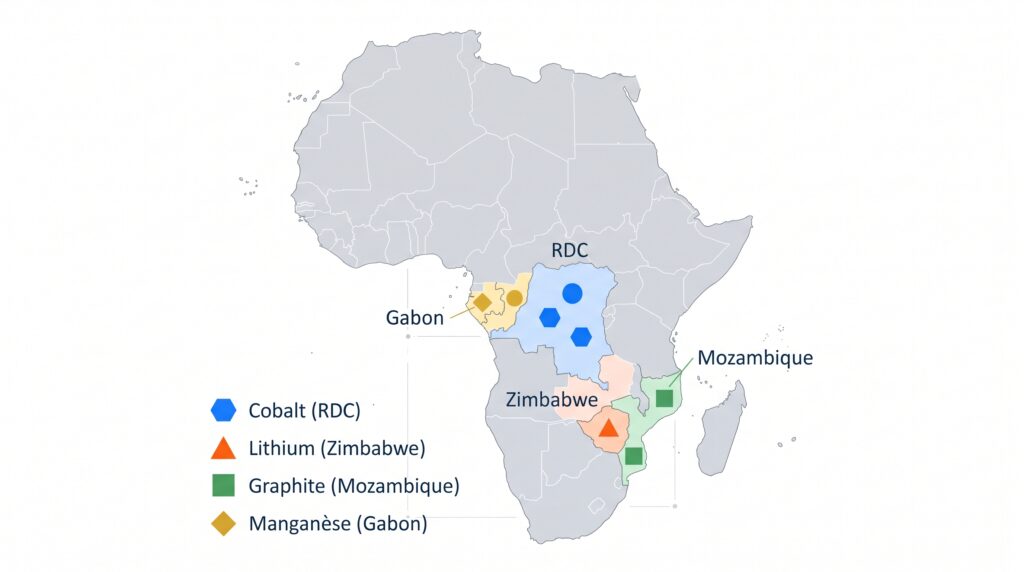
At the consulting firm STRATEGIES!, we share this diagnosis and wish to expand upon it from a perspective grounded in our field experience. This resonance is no coincidence, as during the preparation of the report, Dr. Michael Franczak consulted our firm through our CEO, Kah Walla, regarding our experience providing technical and strategic support for the organizational development of the Kimberley Process Civil Society Coalition in the global diamond governance sector. Kah Walla also shared the lessons[2] drawn from this experience in an interview published by UNU-CPR in May 2026.
After 31 years of experience in the field, STRATEGIES!’s assessment is straightforward: the best global reforms risk remaining mere good intentions if one of the continent’s major structural problems is not resolved—the functionality of the state, whether at the central level, federated or regional states, or decentralized local authorities. Africa needs “Functional States” to convert mining revenues into concrete and lasting improvements in the well-being of its citizens.
1. Summary of the Report’s Five Recommendations for Better Governance of Critical Minerals
The authors propose five recommendations to advance the international governance of critical minerals:
- Establish an International Minerals Agency (IMA), within a multilateral cooperation framework, to strengthen coordination between producing and consuming countries.
- Strengthen the bargaining power of producing countries by pooling their legal, financial, and technical expertise, particularly regarding mining contracts.
- Preserve the policy space of producing countries to develop local and regional mineral processing (value addition).
- Put in place sustainable market and environmental risk management mechanisms, particularly to address price volatility and the costs of repairing environmental damage.
- Give affected communities a formal role in governance, mining oversight, and accountability mechanisms.
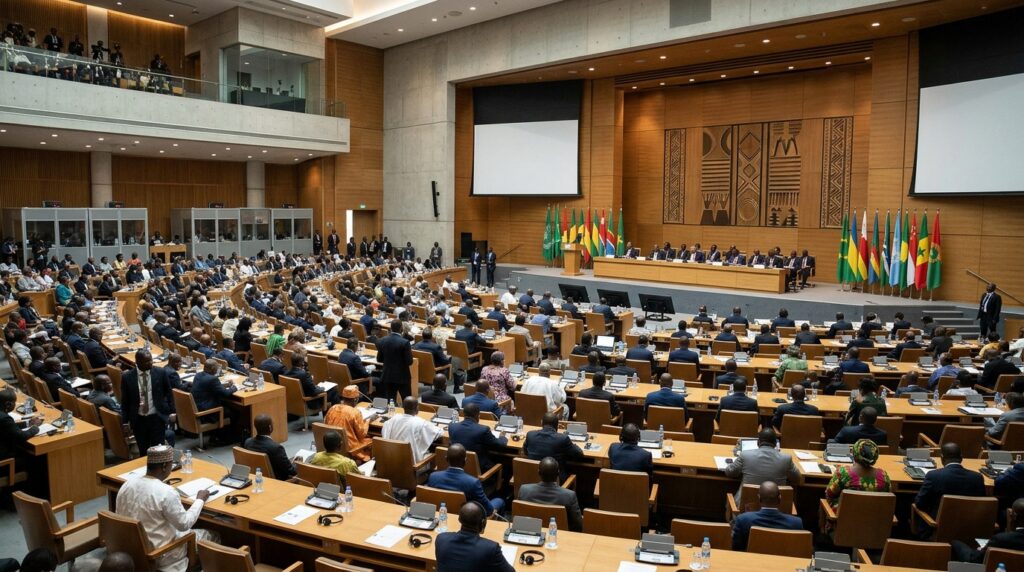
These recommendations are essential to reforming global mineral governance. However, the ability of African countries to effectively benefit from them also depends on the functionality of their institutions, from the central to the local level. International reforms and the building of Functional States must therefore reinforce one another.
2. The Three Dimensions of Functionality Applied to Mining Governance Based on the Report’s Five Recommendations
For STRATEGIES!, a Functional State is defined not only by the existence of institutions, laws, and public policies, but also by its ability to sustainably deliver tangible results for citizens, guarantee their rights, and prepare for the future. Our framework rests on three complementary dimensions. Applied to the mining sector, they make it possible to evaluate the outcomes of public action from the central to the local level:
2.1. Presence and Effectiveness for Useful Public Services Where Mines Are Located
In many mining regions across Africa, the wealth extracted stands in stark contrast to the population’s inadequate access to quality basic services (clean water, electricity, schools, hospitals, etc.). This is a major governance failure. When the state is absent or ineffective, disorder, arbitrariness, and social tensions can take root and, in certain contexts, spark conflicts that escalate into civil wars.
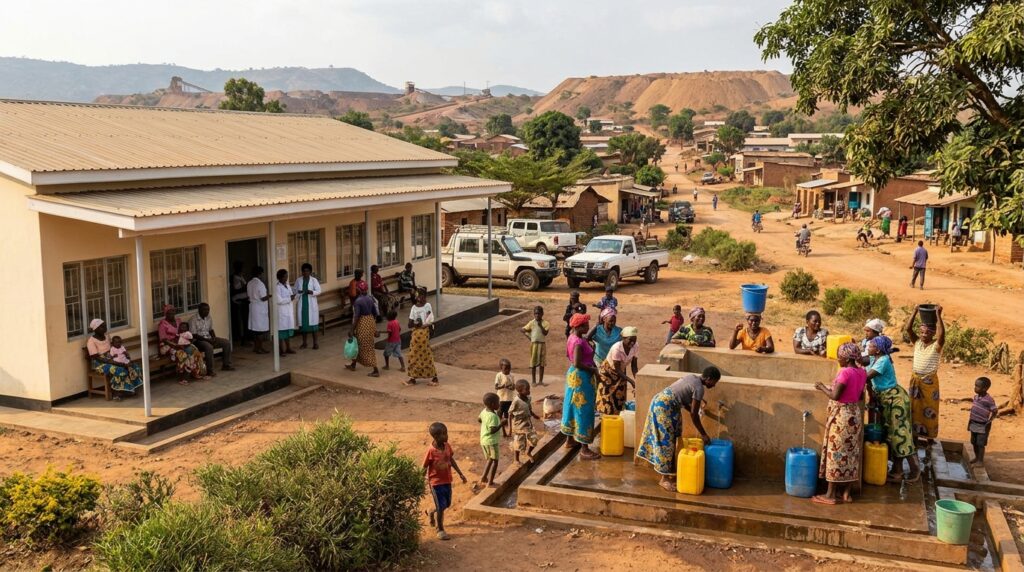
The Presence and Effectiveness dimension helps make the community participation recommended by UNU-CPR effective and enables the local implementation of potential international mechanisms. It requires the state to be visible and useful on the ground. A share of mining revenues must benefit the affected territories through transparent, equitable, and verifiable mechanisms, particularly to improve infrastructure and public services. Extraction zones need institutions capable of ensuring security, upholding the rule of law, protecting human rights, and effectively monitoring mining activities.
2.2. Safety and Sustainability to Protect Rights, Contracts, and the Future
The Safety and Sustainability dimension particularly reinforces the report’s second and fourth recommendations concerning the bargaining power of producing countries and risk management. A Functional State places respect for the human rights of its citizens at the foundation of its actions. It possesses strong legal institutions and a regulatory framework that enable it to negotiate and enforce fair mining contracts. It must also be able to prevent abusive clauses likely to permanently limit its capacity to carry out economic, social, or environmental reforms.
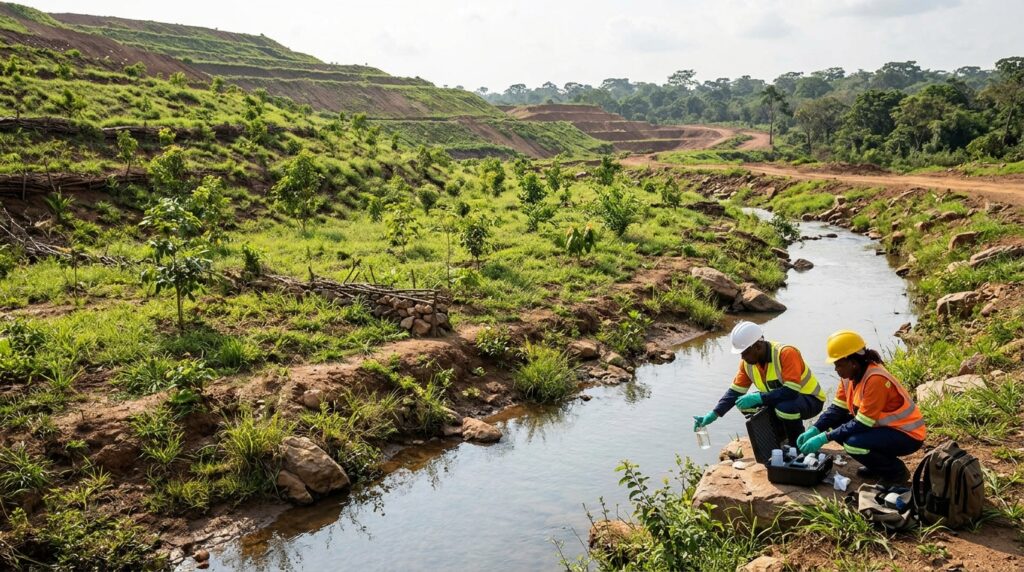
Safety and sustainability also require forward-looking risk management (such as stabilization funds or sovereign wealth funds where conditions permit) to cushion the impact of price fluctuations, alongside environmental monitoring, site closure and rehabilitation plans, and effective damage remediation mechanisms, among others. The goal is to protect populations and the local economy today without compromising the rights and resources of future generations.
2.3. Hope and Adaptability to Create Value and Jobs
Africa can no longer settle for a role largely confined to exporting raw minerals to industrial centers abroad. The Hope and Adaptability dimension aligns with the report’s third recommendation, which addresses preserving the policy and economic space needed for local and regional processing. This is a lever for industrialization, as well as an imperative to anticipate technological changes, market shifts, and skills requirements.
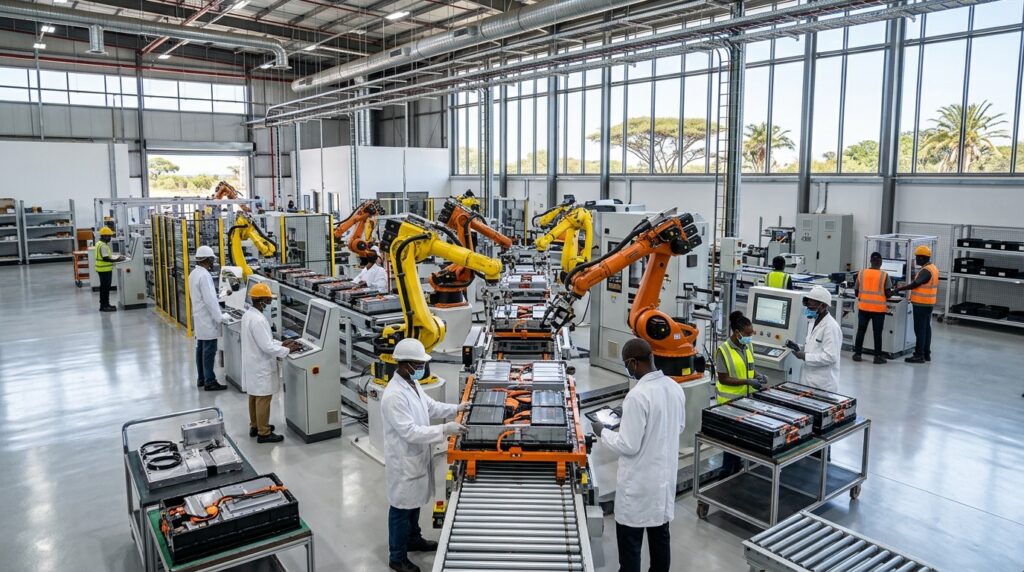
Strategic collaboration among the “architects of functionality” can foster the local transformation of minerals into industrial components, as seen in the joint battery value-chain initiative launched by the DRC and Zambia[3]. Still under development, this initiative illustrates both significant potential and ongoing challenges in coordination, energy, infrastructure, and skills. Such an ecosystem could create decent, skilled jobs for African youth, boost intra-African trade through the African Continental Free Trade Area (AfCFTA), and strengthen the economic autonomy of African stakeholders.

Hope and adaptability also require environmentally responsible mining that is open to the knowledge, techniques, and experience of African mining actors. Artisanal miners must be able to gain recognition for their expertise, improve their practices, and integrate into a formalized, safe mining economy that generates wealth for both today and tomorrow.
3. The Architects of Functionality at the Heart of Improved Mining Governance
The governance of critical minerals cannot rely solely on an isolated central government, which often faces power imbalances when dealing with global buyers. For STRATEGIES!, functionality requires structured collaboration among three categories of complementary actors, whom we call the architects of functionality. Among other things, this collaboration must be organized and regulated among the following architects:
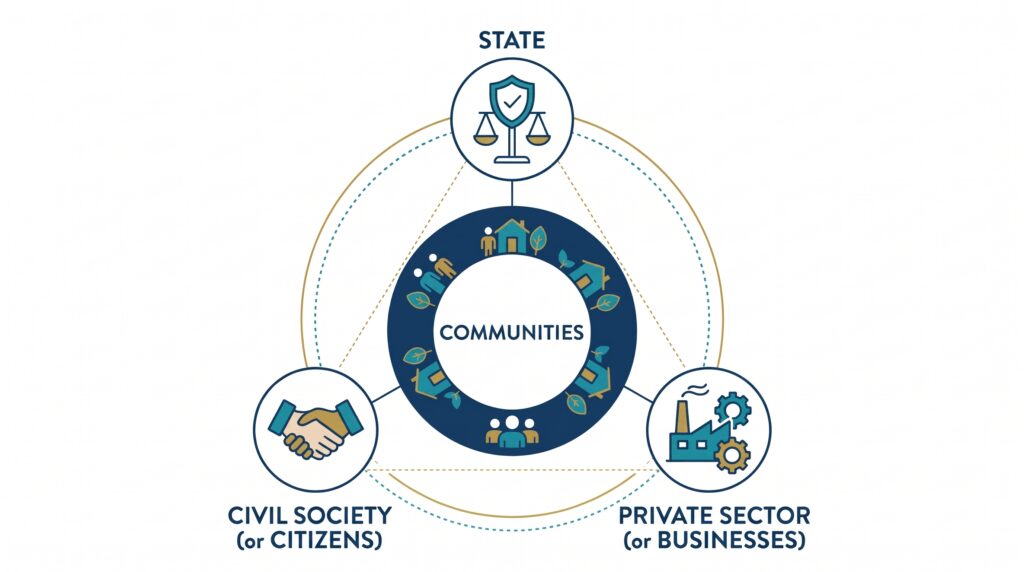
- The State (central and/or decentralized): It acts as the regulator and strategist. It sets clear, stable, and predictable rules. It must be capable of mapping its subsoil resources, negotiating fair contracts, and monitoring their enforcement. It creates the conditions that allow the other architects to work with it effectively and with full respect for rights.
- The Private Sector: It is the engine of investment and production. It brings capital, technology, and expertise, contributes to local processing, and creates jobs. A Functional State does not view it as an enemy, but as a partner subject to clear obligations. In the mining sector, private actors include artisanal miners, SMEs, and multinationals. All must be able to operate in compliance with the law, the environment, and the rights of other stakeholders.
- Civil Society: It serves as the guarantor of citizen vigilance, accountability, and fairness. It helps amplify the voices of local populations, monitors contract transparency, and exposes abuses. STRATEGIES!’s experience with the Kimberley Process Civil Society Coalition demonstrates the importance of structured, independent participation in mining governance.
However, this three-actor architecture must not sideline the communities directly affected by mining projects. These communities must have their own mechanisms for representation, participation, and recourse, complementing the efforts of organized civil society. Development partners, NGOs, and specialized local associations also make an essential contribution to building functionality on the ground.
4. Mining Governance Rooted in Ground Realities, Moving Beyond Mimicry
One of the major risks for African mining governance is institutional “mimicry”—that is, the tendency to set up administrations, adopt modern laws, or join international initiatives such as the Extractive Industries Transparency Initiative (EITI) without putting in place the capacities, resources, and oversight mechanisms needed to enforce them. This disconnect between formal rules and their implementation widens the execution gap observed on the ground.
STRATEGIES!’s experience in the diamond sector with the Kimberley Process Civil Society Coalition, as well as in the Great Lakes region on the “3Ts” (tin, tantalum, tungsten) and gold with the International Conference on the Great Lakes Region (ICGLR), has taught us that an international certificate of compliance holds little reliability if national and local institutions lack the technical skills, tools, and integrity needed to inspect a mine or control a border. Similarly, the UNU-CPR report underscores the importance of strong mandates, durable institutions, and predictable financing by recalling the failure of certain international price stabilization mechanisms developed from the 1970s onward after financial support from Northern countries ended.
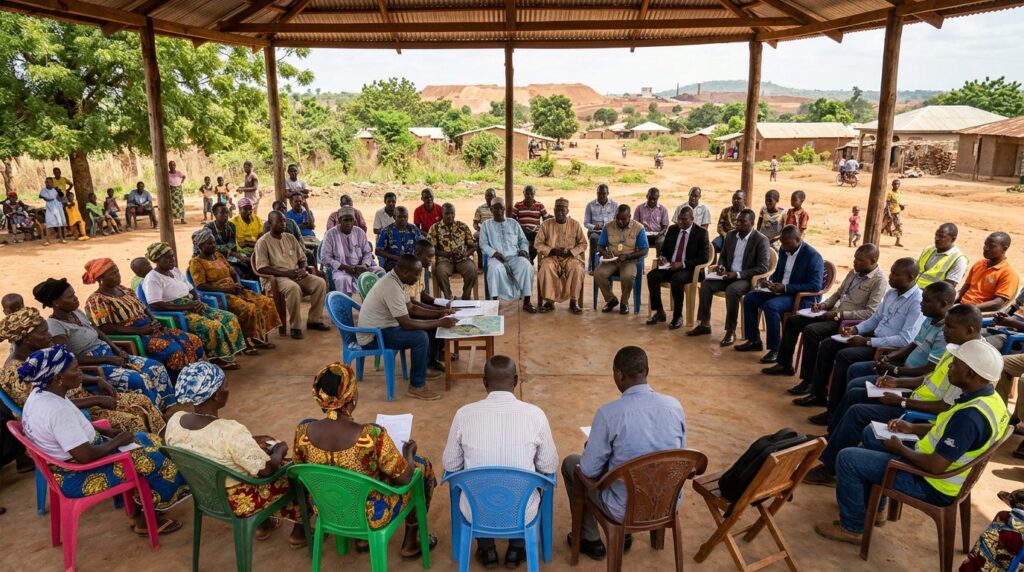
Thus, economic sovereignty and citizen well-being, in the context of the new competition over Africa’s critical minerals, require the methodical building of state functionality from the central to the local level. This includes the capacity to enforce the law, collect taxes fairly, track the use of mining revenues, stimulate productive investment, and account for results to the population.
Conclusion: A Call for African Leadership
Implementing the recommendations of Michael Franczak and Irfana Khatoon requires a paradigm shift. Africa lacks neither resources nor diagnoses. It must also rise to a major challenge: strengthening the functionality of its institutions and the quality of its leadership, while addressing imbalances in international governance.
To sustainably improve the living conditions of African citizens in the era of critical minerals, it is crucial to train a new critical mass of public, private, and civil society decision-makers, and to renew leadership practices. We need leaders who stand out not merely for their rhetoric, but for their technical rigor, integrity, accountability, and ability to deliver measurable results in service of citizens.
The global transition toward critical minerals offers Africa a renewed opportunity to move from a primarily extractive economy to an economy of processing, value addition, and sustainable development. To seize this opportunity, new international rules and funding alone will not be enough: above all, African countries will need to build Functional States capable of mobilizing public, private, and civil society actors, guaranteeing the rights of their populations, and sustainably transforming their subsoil wealth into shared prosperity.
[1] To read the report, please follow this link: https://unu.edu/publication/governing-critical-minerals-histories-gaps-actions-and-innovative-models
[2] You can know more about these lessons through this link: https://unu.edu/cpr/feature/rethinking-mining-governance-and-africas-critical-minerals-opportunity
[3] In case you want to know more about that specific case, please follow this link: https://www.iisd.org/publications/report/battery-value-chains-central-african-copperbelt